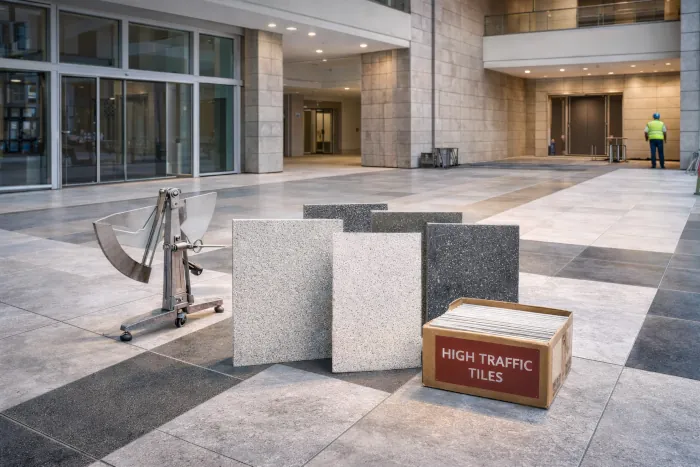
Choosing tiles for a commercial space is not just about looks – it’s about performance under pressure. In high-traffic environments, the wrong tile choice leads to early wear, safety risks, and costly repairs.
Many business owners focus on design first, but industry discussions (including Reddit and Geekzone) consistently show the same problem: tiles fail because they were not selected for the environment they’re used in.
1. Durability Comes First – Not Appearance
High-traffic commercial areas require tiles that can handle constant foot movement, equipment, and cleaning.
- Porcelain tiles are preferred for their density and strength
- Full-body tiles hide wear over time
- Low water absorption improves longevity
If durability is ignored, tiles may crack, chip, or wear unevenly within just a few years – especially in retail or hospitality spaces.
For long-term performance, working with experts in commercial tiling ensures the right materials are selected from the start.
In commercial spaces, the best-looking tile is useless if it cannot handle daily stress.
2. Slip Resistance Is a Safety Requirement
Slip resistance is not optional – it’s critical for public and workplace safety.
Tiles should be selected based on:
- Surface texture (matte or structured finishes)
- Slip ratings (e.g. R-ratings or P-ratings)
- Wet vs dry conditions
According to WorkSafe New Zealand, slips and falls are one of the most common workplace incidents, making tile choice directly linked to liability.
3. Size and Layout Affect Performance
Tile size is not just a design choice – it affects grip, movement, and maintenance.
- Larger tiles = fewer grout lines, cleaner look
- Smaller tiles = more grip due to grout joints
In high-risk areas like kitchens or entrances, smaller tiles often perform better due to increased slip resistance.
Planning layout correctly is just as important as material selection – something covered in what to know before renovating.
Large tiles may look premium – but in wet commercial areas, they can increase slip risk if chosen incorrectly.
4. Maintenance and Cleaning Matter More Than You Think
Commercial tiles are exposed to frequent cleaning, chemicals, and wear.
- Glossy tiles show dirt and scratches more easily
- Textured tiles require more intensive cleaning
- Grout quality impacts long-term appearance
Choosing tiles without considering maintenance leads to higher operational costs over time.
Proper care practices outlined in tile maintenance guides can significantly extend tile lifespan.
5. The System Behind the Tile Is Critical
Even the best tile will fail if the system underneath is wrong.
This includes:
- Substrate preparation
- Adhesives suitable for load conditions
- Movement joints
- Waterproofing where required
Many failures discussed online come down to poor installation rather than poor materials.
Understanding issues like why waterproofing fails helps avoid hidden long-term damage.
6. Cost vs Value – Think Long-Term
Choosing cheaper tiles may reduce upfront cost, but it often leads to higher long-term expenses.
- More frequent repairs
- Shorter lifespan
- Potential business downtime
A better approach is to focus on lifecycle cost – not just installation price.
Insights into cost vs quality decisions show why investing in the right system pays off.
Choosing tiles for high-traffic commercial spaces is not about style – it’s about durability, safety, and long-term performance.
The right choice lasts decades.
The wrong choice fails fast – and costs far more.
FAQs About High-Traffic Commercial Spaces
Table of Content
- 1. Durability Comes First – Not Appearance
- 2. Slip Resistance Is a Safety Requirement
- 3. Size and Layout Affect Performance
- 4. Maintenance and Cleaning Matter More Than You Think
- 5. The System Behind the Tile Is Critical
- 6. Cost vs Value – Think Long-Term
- What Homeowners Ask Most About Tiles
- What Type of Tiles Are Best For High-Traffic Commercial Spaces?
- What Slip Rating Should Commercial Floor Tiles Have?
- Do Larger Tiles Perform Worse in High-Traffic Areas?
- How do I Choose Tiles That Are Easy to Maintain?
- Is Tile Quality or Installation More Important?