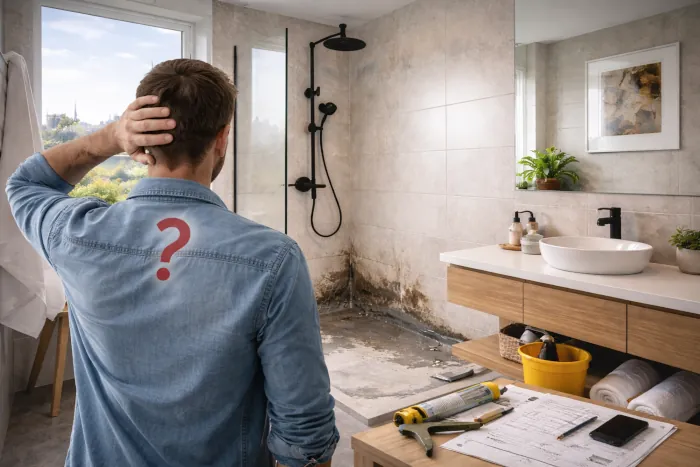
Before you choose tiles or layouts, understand the one system that protects your entire bathroom – and what can go wrong if it’s overlooked.
1. Why Waterproofing Matters More Than You Think
Bathrooms are the most moisture-heavy environment in any home. Every shower, every splash, and every temperature change creates stress on surfaces and structures.
Without proper waterproofing:
- Water penetrates behind tiles – leading to hidden damage
- Mould develops inside walls – not just on surfaces
- Subfloors and framing deteriorate over time
- Repairs become structural, not cosmetic
Real-world cases discussed on homeowner forums show that even recently renovated bathrooms can suffer major leaks when waterproofing is not installed correctly, with water travelling into ceilings and wall cavities and causing widespread damage, as described in this discussion on a Geekzone post.
Waterproofing is not optional in wet areas – it is a required system under the NZ Building Code.
2. Auckland Requirements – Consent, Compliance & PS3
Before starting a bathroom renovation or bathroom waterproofing services in Auckland, it’s important to understand the legal requirements.
Depending on the scope of work, you may need:
- Building consent – for new waterproofing or layout changes
- PS3 Producer Statement – issued by a certified installer
- Compliance with NZ Building Code
This is why working with experienced professionals is critical – not just for quality, but for compliance.
3. Types of Waterproofing Systems – What You’re Actually Choosing
Not all waterproofing systems are the same. The type used can significantly affect performance and lifespan.
Each system has its place, but the key factor remains the same: correct installation matters more than the product itself.
4. Common Mistakes Homeowners Make
Most waterproofing failures are not due to bad luck – they are preventable mistakes.
- Choosing the cheapest quote – often cutting critical steps
- Rushing the process – especially curing times
- Ignoring substrate preparation
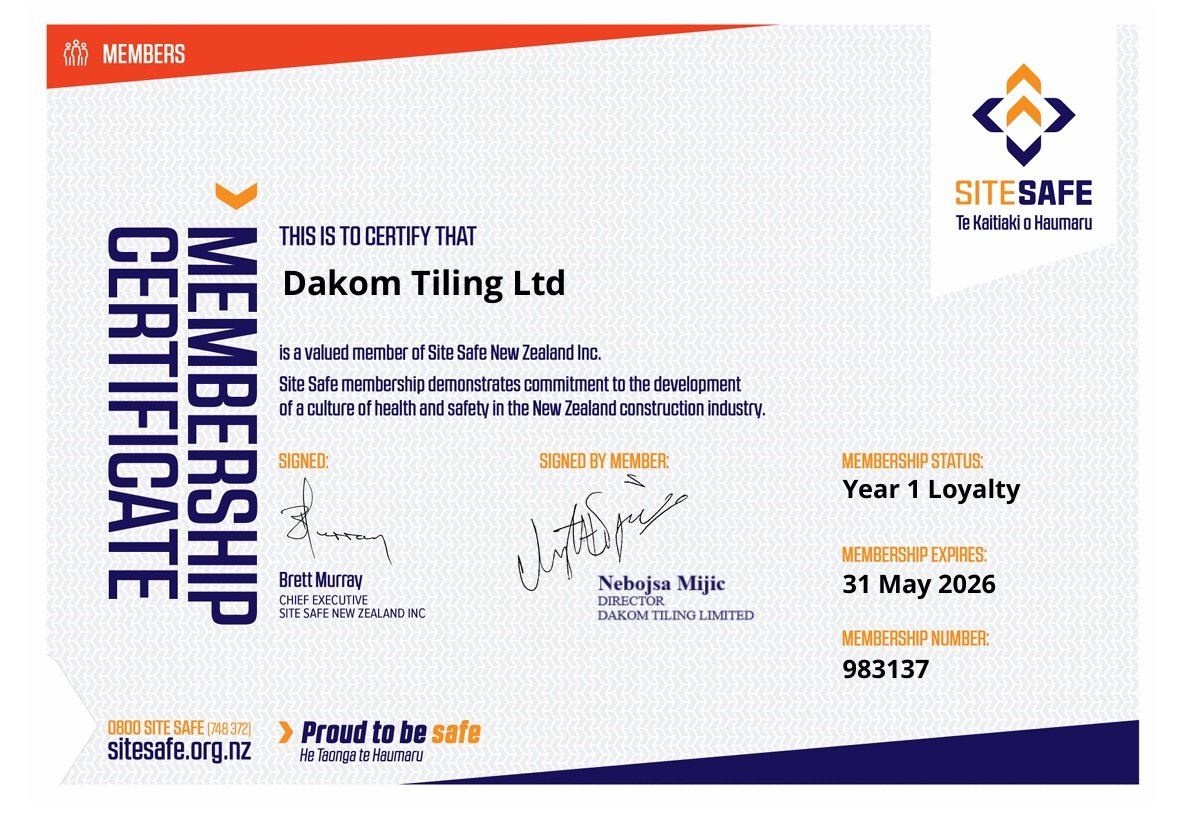
- Hiring non-certified installers
Industry guidance and real-world cases consistently show that waterproofing failures are most often caused by poor preparation, rushed installation, and incorrect application, including issues like skipping primer, improper detailing, and not allowing adequate curing time, as outlined in common waterproofing mistakes and how to avoid them.
The cheapest quote is often the most expensive mistake – especially when waterproofing is involved.
5. The Role of Professional Installation
Even the best waterproofing system will fail if installed incorrectly. Professional installation ensures:
- Correct membrane thickness and coverage
- Proper reinforcement of joints and corners
- Compliance with NZ standards and documentation
- Long-term durability and performance
Our tiling experts see waterproofing as a completely different system – from preparation to final inspection – ensuring every bathroom meets both structural and compliance standards.
“You can replace tiles easily. You cannot easily fix what’s behind them.”
6. Final Thoughts – Build It Right the First Time
A bathroom renovation is a long-term investment. Done correctly, it adds value, comfort, and durability to your home. Done poorly, it becomes a hidden liability.
Waterproofing is not the most visible part of your bathroom – but it is the most important. Taking the time to understand the process, choose the right system, and work with experienced professionals will save you money, stress, and major repairs in the future.
Because in the end, a beautiful bathroom is only as good as what’s behind the tiles.
FAQs About What Homeowners Need to Know Before Renovating
Table of Content
- 1. Why Waterproofing Matters More Than You Think
- 2. Auckland Requirements – Consent, Compliance & PS3
- 3. Types of Waterproofing Systems – What You’re Actually Choosing
- 4. Common Mistakes Homeowners Make
- 5. The Role of Professional Installation
- 6. Final Thoughts – Build It Right the First Time
- What Homeowners Ask Most About Tiles
- Do I Need Waterproofing For Every Bathroom Renovation in Auckland?
- What is a PS3 And Why is it Important For Bathroom Waterproofing?
- How Long Does Bathroom Waterproofing Last in Auckland Conditions?
- Can I Choose Cheaper Waterproofing to Save Money?
- How do I Choose The Right Contractor For Waterproofing in Auckland?